Jump to:
Garden playhouses should be a safe place where your kids can play and enjoy time outdoors. While they’re built to meet strict safety standards, no wooden structure stays the same once it’s exposed to the elements.
Weather, daily use, and the odd bit of rough play can all lead to wear over time = potential risks. This guide walks you through the common hazards in Wendy houses to look out for to ensure your little one’s safety.
How to Spot Wendy Houses Common Hazards and Fix Them
These points of risk don’t just appear on Wendy houses. They can show up on any wooden playhouse. High-quality, child-safety certified models don’t cause this; it’s the realities of UK harsh weather and active play.
These are the signs that the structure is being affected:
Loose picket fences and fixings
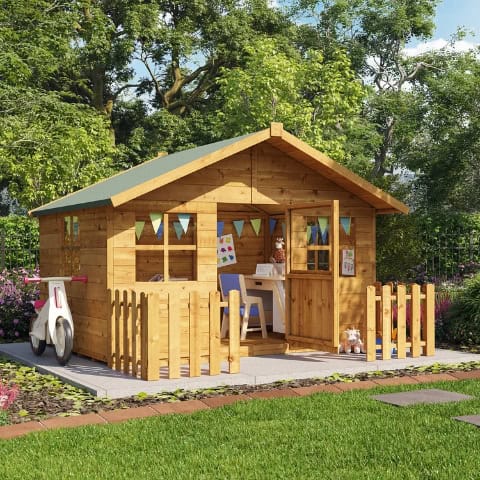
Picket fencing is a lovely add-on to the front or sides of a playhouse. Not only does it give the structure a fairytale cottage or mini home vibe, but it also lets children extend their play area.
Even so, fences can take knocks from play, bumps while moving toys, or small leaning, which may eventually cause screws or brackets come to loose. Don’t wait for them to start wobbling. Instead, you can:
- Check all screws and fixings on the picket fence and tighten anything that has shifted
- Replace any broken or bent parts right away
It won’t need much maintenance once this trouble spot is taken care of before it escalates.
Here’s our selection of kids’ playhouses with the option to include a picket fence:
Loose hardware on ladders and raised platform railings
If you opted for a two-storey or tower model, your child likely loves scrambling up the ladder and leaning over the balcony. Because many wooden playhouses are designed for self-assembly, they rely on the initial hardware installation remaining tight. However, constant climbing, pulling, and the natural expansion and contraction of timber in damp UK weather can cause the screws and bolts on these high-traffic areas to wiggle loose over time. Correct maintenance is an essential part of their safety.
Ladders and guardrails are critical safety features for raised areas, so they need to remain rock solid. A wobbly ladder rung or a loose railing instantly compromises the safety of the upper level.
To ensure these elevated spaces stay secure, add these quick checks to your routine:
- The shake test: Give the ladder and the balcony railings a firm shake to check for any unexpected give or wobbling.
- Tighten the hardware: Test every individual rung and use a screwdriver or drill to tighten any screws, bolts, or brackets that have shifted.
- Inspect the base: Check the very bottom of the ladder where it meets the ground. Because an outdoor ladder sits directly on the earth or base, it is more susceptible to dampness, so ensure the timber here never sits in a puddle.
Taking a few minutes to tighten these fixtures ensures that even the most energetic climbs up to the second floor remain completely safe.
Windows that have moved out of position
Shatterproof styrene windows are a safer alternative to glass (and they’re a feature you’ll find in our range of playhouses). But we all know how kids can be energetic and unpredictable. Leaning, tapping, or bouncing near the windows can nudge the flexible material out of its frame.
While it won’t break into sharp shards if impacted, it can still be unsafe to play around. Signs that this has happened include an uneven appearance or windows that are harder to open and close.
When checking, you may feel movement by pressing the edges. Gaps and warping might also be present. To fix this: realign the panel, fasten any loose parts, and make sure the window sits flush in its frame.
Splinters, rough edges, and timber wear
Timber changes with the weather. Sun, rain, and moisture can all affect the surface, especially if it hasn’t been treated for a while. Raised grain, cracks, and rough patches are likely to show up, and these can be potentially harmful for children when around.
Check along the walls, doors, and fences, then sand down any splintered areas and treat exposed wood.
Use a medium-grit sandpaper, around 120, to smooth the surface. Follow with fine-grit one, ideally 220, to make it safer for little hands. After sanding, treat the timber with a child-safe wood preservative or exterior wood oil. Allow it to fully dry before children play.
Tip: If the playhouse is painted, use non-toxic exterior paint or wood stain to seal the wood and protect it from moisture and damp.
Damp, rot, or soft wood
Moisture is one of the main causes of long-term damage in wooden playhouses. It can seep into exposed timber, sometimes worsened by foot traffic or dragging toys along the floor. If overlooked, these openings can lead to rot, soft spots, or mildew.
Here’s what you can do: Inspect the base and floor panels for any soft or spongy areas. Small sections of damp or weakened wood can be reinforced with timber filler or replaced entirely if needed. Make sure the ground beneath the playhouse drains well, and move mats or rugs off wet areas so water doesn’t collect underneath.
Blocked ventilation holes
Ventilation holes allow fresh air to circulate inside and prevent stuffiness and condensation. These are often pre-cut, windows that can open, door gaps, or small vents under the eaves – a standard for EN71 playhouses (more on this later). Yet, they can be blocked by:
- Toys or furniture pushed against the vents
- Rugs, mats, or cushions placed near walls or windows
- Leaves, pine needles, or other garden debris
Lift away any toys, rugs, or cushions that are nearby, and clear leaves or debris that may have gathered. A cloth or brush is enough to dust off vents and keep air flowing.
Door that stick or don’t close well
Moisture can also make door panels swell and jam against the frame. Drying out from sun and heat changes can also create gaps in other areas. On top of that, screws or brackets can shift with frequent use, causing misalignment.
Make small adjustments as needed, such as tightening fixings, sanding the edges or frame to align the door, and ensuring the playhouse sits on a flat, stable surface.
Doors should get the same care as windows. After all, weather and kids put them through a lot!
Ground stability
The base carries all the weight of the playhouse, so anything that shifts underneath can cause problems. Soft patches after rain, frost heaving, or too much foot traffic can make the floor uneven. The whole structure will feel a little off-balance.
Keep an eye on any uneven patches around the playhouse. Top up any low spots with firm soil, or add a layer of paving slabs or boards where it’s worn.
How Often Should You Check for Playhouse Hazards?
Every few weeks is fine, and especially after bad weather or when the kids have been extra active. Walk around the playhouse, see anything out of place, and take care of it. Knowing the structure is in good shape and your child’s playtime is worry-free surely can give you peace of mind.
Why Parents Trust BillyOh Playhouses
All our playhouse units comply with the British Standards (BS) EN71, meaning they’re built with kids in mind. They’re designed to be a safe and fun space for your little one to play, from the materials used to the smooth edges, fire safety, and solid build. You can relax knowing they’re playing in something that’s been tested and certified.
Other safety features included in our playhouses:
- Shatterproof glazing: All windows come with durable single SAN glazing as standard.
- Finger gap around the door: The built-in gap around the door reduces the risk of pinched fingers when opening or closing.
- Non-toxic treatment: Wood protection without the harsh chemicals. Timber-treated units also have a 10-year guarantee against rot, decay, and insect infestation. Safe for them, long-lasting for you!
You can choose this option by selecting the treatment from the add-ons, from standard to pressure-treated.
- Ventilation holes: For keeping the room feeling fresh for everyday play.
If the playhouse becomes too hot, here’s what you can do:
Outdoor Playhouse Too Hot? How to Prevent Overheating
These features give reassurance on their own, but a little care from you ensures the playhouse stays safe for years.
And when your child outgrows their BillyOh playhouse, you don’t have to let it go to waste. It can be repurposed into something more suited to teenagers. Check out our guide, ‘Playhouse Ideas for Teenagers,’ for inspiration.
FAQs
Should I add extra safety features to my child’s playhouse?
Yes, in fact, we recommend doing this as much as possible. Start with the floor with soft ground covering, like rubber tiles or grass mats, inside the playhouse to cushion slips and trips. Corner protectors on sharp edges can also help.
Is it safe to use the playhouse after maintenance or treatment?
No. Please wait once everything is fully dry and set. This includes paint, wood treatments, or any repairs. Letting materials settle properly avoids contact with damp surfaces or strong smells.
How can I make the playhouse safer for younger children?
Set a few easy rules, like no climbing on the walls, and make sure the space around the playhouse is clear. Keep an eye on the younger kid – they can be full of energy. Try to keep up with them, or you’ll lose!
Does planning permission affect the safety of a playhouse?
Planning rules are focused on placement and size, but they can still impact safety. Following guidelines helps ensure the playhouse is positioned away from boundaries, hazards, or overcrowded areas, giving children enough safe space to play.
Where is the safest place to position a playhouse in the garden?
A flat, open area with good visibility from the house is your best bet. Avoid placing it too close to fences, walls, or hard surfaces that could increase the risk of bumps or trips.
Is it safe for multiple children to play inside at once?
It depends on the size of the playhouse. Avoid overcrowding, as it can lead to pushing, trips, or strain on the structure. Give children enough space to move comfortably inside.
Use the guide below to find the perfect playhouse for your little ones: